Showing posts with label Toyota. Show all posts

TOYOTA SPORT CAR 2014

toyota sport car

toyota spiral sport car

toyota 2014

toyota sport car 2014

TOYOTA AVALON 2014 DESIGN

new toyota avalon concept design

toyota avalon 2014

cheap toyota avalon

interior dashboard design of avalon - toyota

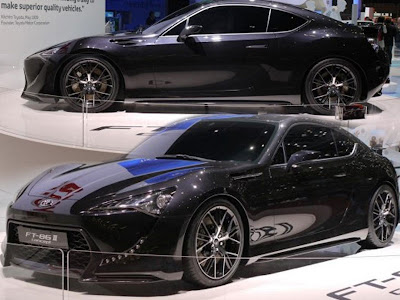
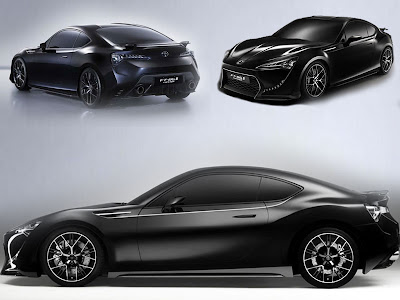
NEW TOYOTA SUBARU FT-86 TOKYO MOTOR SHOW SPORT CARS

toyota subaru sport car concept

new sport car toyota concept design

toyota subaru interior design

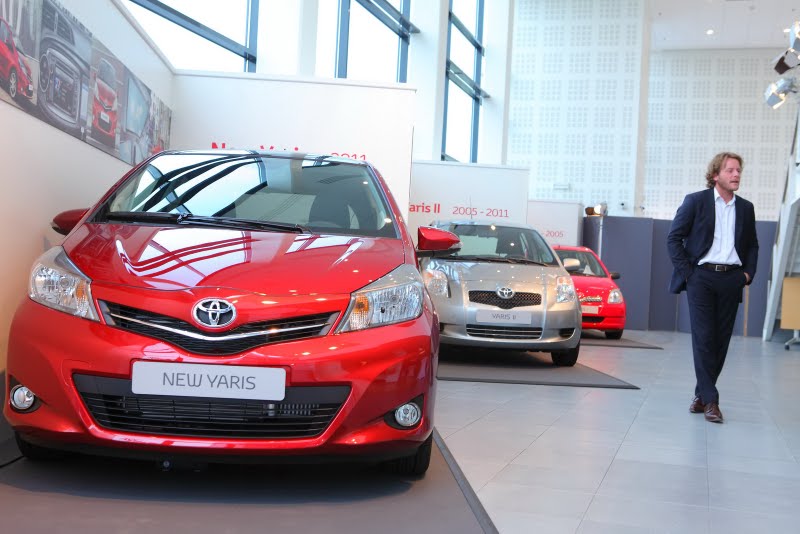
NEW TOYOTA YARIS - MODERN IN STYLE AND TECHNOLOGY

new toyota yaris 2013

sporty design toyota yaris hybrid

modern style of toyota yaris sport car

new toyota yaris sport car

NEW SEDAN TOYOTA SPORT CAR IMAGES

new sedan toyota sport car

toyota racing car

toyota sport car 2013

new toyota sport car

TOYOTA SPORT CARS 2013 and WALLPAPERS

toyota sport car 2013

toyota ft hs sport cars

new toyota sport car concept design

toyota cars wallpaper

toyota sport car

Toyota Free Wallpaper Pics Pictures Hd for Desktop Iphone Mobile HD 1080p

Toyota Definition

Source (google.com.pk)
Lean principles are derived from the Japanese manufacturing industry. The term was first coined by John Krafcik in his 1988 article, "Triumph of the Lean Production System," based on his master's thesis at the MIT Sloan School of Management.[4] Krafcik had been a quality engineer in the Toyota-GM NUMMI joint venture in California before coming to MIT for MBA studies. Krafcik's research was continued by the International Motor Vehicle Program (IMVP) at MIT, which produced the international best-seller book co-authored by Jim Womack, Daniel Jones, and Daniel Roos called The Machine That Changed the World.[1] A complete historical account of the IMVP and how the term "lean" was coined is given by Holweg (2007).[2]
For many, Lean is the set of "tools" that assist in the identification and steady elimination of waste (muda). As waste is eliminated quality improves while production time and cost are reduced. A non exhaustive list of such tools would include: SMED, Value Stream Mapping, Five S, Kanban (pull systems), poka-yoke (error-proofing), Total Productive Maintenance, elimination of time batching, mixed model processing, Rank Order Clustering, single point scheduling , redesigning working cells, multi-process handling and control charts (for checking mura).
There is a second approach to Lean Manufacturing, which is promoted by Toyota, in which the focus is upon improving the "flow" or smoothness of work, thereby steadily eliminating mura ("unevenness") through the system and not upon 'waste reduction' per se. Techniques to improve flow include production leveling, "pull" production (by means of kanban) and the Heijunka box. This is a fundamentally different approach from most improvement methodologies, which may partially account for its lack of popularity.[citation needed]
The difference between these two approaches is not the goal itself, but rather the prime approach to achieving it. The implementation of smooth flow exposes quality problems that already existed, and thus waste reduction naturally happens as a consequence. The advantage claimed for this approach is that it naturally takes a system-wide perspective, whereas a waste focus sometimes wrongly assumes this perspective.
Both Lean and TPS can be seen as a loosely connected set of potentially competing principles whose goal is cost reduction by the elimination of waste.[5] These principles include: Pull processing, Perfect first-time quality, Waste minimization, Continuous improvement, Flexibility, Building and maintaining a long term relationship with suppliers, Autonomation, Load leveling and Production flow and Visual control. The disconnected nature of some of these principles perhaps springs from the fact that the TPS has grown pragmatically since 1948 as it responded to the problems it saw within its own production facilities. Thus what one sees today is the result of a 'need' driven learning to improve where each step has built on previous ideas and not something based upon a theoretical framework.
Toyota's view is that the main method of Lean is not the tools, but the reduction of three types of waste: muda ("non-value-adding work"), muri ("overburden"), and mura ("unevenness"), to expose problems systematically and to use the tools where the ideal cannot be achieved. From this perspective, the tools are workarounds adapted to different situations, which explains any apparent incoherence of the principles above.


Toyota Free Wallpaper Pics Pictures Hd for Desktop Iphone Mobile HD 1080p

Toyota Free Wallpaper Pics Pictures Hd for Desktop Iphone Mobile HD 1080p


Toyota Free Wallpaper Pics Pictures Hd for Desktop Iphone Mobile HD 1080p


Toyota Free Wallpaper Pics Pictures Hd for Desktop Iphone Mobile HD 1080p


Toyota Free Wallpaper Pics Pictures Hd for Desktop Iphone Mobile HD 1080p


Toyota Free Wallpaper Pics Pictures Hd for Desktop Iphone Mobile HD 1080p


Toyota Free Wallpaper Pics Pictures Hd for Desktop Iphone Mobile HD 1080p


Toyota Free Wallpaper Pics Pictures Hd for Desktop Iphone Mobile HD 1080p


Toyota Free Wallpaper Pics Pictures Hd for Desktop Iphone Mobile HD 1080p


Toyota Free Wallpaper Pics Pictures Hd for Desktop Iphone Mobile HD 1080p

Toyota Free Wallpaper Pics Pictures Hd for Desktop Iphone Mobile HD 1080p


GRMN Sports FR Concept


Toyota affiliated tuning design and race engineering firm GRMN (Gazoo Racing Masters of Nürburgring) has revealed a racing version of its GT86 sports coupe dubbed the Sports FR Concept. It will make exhibited for the first time at the 40th 24 Hours of Nürburgring endurance race which will be held at the Nürburgring Circuit in the state of Rhineland-Palatinate, Germany, from May 17 to 20. Dramatically enhanced from the standard production version, the Sports FR Concept features a 2.0-liter twincharged engine (turbocharger + supercharger) that produces 320 HP (235 kW / 316 bhp) and 421 Nm (310 lb-ft) of torque via a 6-speed manual transmission. Other modifications include GRMN suspension tuning with 18-inch racing wheels, GRMN brakes, widebody kit with redesigned front and rear fascias, side skirts and fenders, roll cage, stripped interior with racing bucket seats and 4-point harnesses, large rear spoiler and GRMN dual exhaust system.


Toyota iQ by Vilner


If you'd like your Aston Martin Cygnet a little on the cheap, then you can opt for this re-styled Toyota iQ by Bulgarian design house Vilner.

The styling house gives this iQ the kind of treatment expect of a more prominent car and tuns this little errand-runner into a real luxury minicar.

Fine finish includes brown Nappa leather with a matching Alcantara trim for the roof lining and dashboard.

But Vilner keeps the mini's identity firmly established with the 'iQ' nameplate engraved into each of the headrests.

Singapore Police Car: Toyota Corolla Altis

Singapore Police Force Toyota Corolla Altis police car.


Singapore Toyota Corolla Altis Police Car

Google's Self-Driving Car Involved in California Accident

Editor's Note: An earlier version of this story incorrectly stated in the title that this was the first accident involving a Google self-driving car. The corrected version reflects a change only in the title of this article. We also posted an updated story on the incident that includes a new video and an official statement from a Google spokesperson.

Many companies are developing self-driving cars. The latest example is VW’s TAP (Temporary Auto Pilot) that was recently demonstrated on video.
Another earlier model is Google’s automated/driverless fleet of Toyota Prius hybrids developed with the help of the military’s DARPA (Defense Advanced Research Project Agency) 2007 Urban Challenge winner, Chris Urmson and Anthony Levandowski, the maker of the world’s first autonomous motorcycle (again, for DARPA) – oh, and an self-driving pizza-delivery vehicle.
The question many skeptics raise is who would be responsible in an accident involving a self-driving car. Handing over control to a machine may sound like a good idea: the car will obey speed limits, never do anything dangerous like overtaking on the right, and the streets will be safer.
However, as a recent accident in Google’s campus showed, when a Google Prius was involved in an accident, practice is a different thing from theory.
Google’s autonomous car researcher Sebastian Thrun called the system “the perfect driving machine” and said that self-driving cars can save one million lives every year –and that’ a goal worth pursuing. Google later revealed to Business Insider that one of the cars was operated by a human, the implication being that the autonomous driving system is not the culprit.
While we're not questioning Google’s statement, the issue remains: who exactly is responsible in the case of an accident involving a self-driving car? Since no two situations are ever the same, how can one rely on a computer to decide what’s best and for whom –the passengers of the car it controls, those of another vehicle, or a pedestrian?
What if the software crashes? What if there is a hardware malfunction? Even PCs, with decades of development behind them encounter such problems – which, while frustrating, are not life-and-death issues.
The thing is that Nevada has already been convinced by Google to legalize autonomous cars on the state’s freeways. And Google is using its Prius fleet in California, where legislature does not pose any bans.
But is anyone ready to guarantee that AI-driven vehicles can operate in a fail-safe way dramatically reducing accidents and casualties?

VIDEO


Read more In Cars

Toyota Shows US Market 2012 Yaris Hatch at Lollapalooza Music Fest

When an automaker is ready to launch a new model into the market, we usually receive a press release along with some initial or teaser photos before we see it in person at a major auto show.

But that's not the case with the U.S. market version of the 2012 Yaris as Toyota quietly unwrapped the car under a tent at the…Lollapalooza annual music festival in Chicago this past weekend while today, the Japanese company announced U.S. pricing without, however, releasing any photos or further details. Strange indeed.
We'll remind you that the new generation of the Yaris was first shown in Japan in December, 2010. Toyota then presented a concept hybrid version at the Geneva Show in March this year before revealing the final production model for Europe in June and for Australia in July at the Melbourne Motor Show.
Toyota said the redesigned 2012 Yaris's base MSRP will range from $14,115 for the L grade three-door liftback fitted with a five-speed manual gearbox to $17,200 for the SE grade five-door liftback with a four-speed automatic transmission.
The aforementioned MSRPs do not include a $760 delivery, processing and handling (DPH) fee which lifts prices to $14,875 and $17,960 for the 2012 Yaris L and Yaris SE grades respectively
Toyota said that pricing for the new model is "comparable to a Convenience Package-equipped current generation Yaris" adding that production of the car will start on August 31.
And while Toyota did not announce any further details, Cars.com editor Joe Bruzek was at the Lollapalooza music fest where he managed to get a look at the spec sheet found on the 2012 Yaris LE that was on display.
The LE comes fitted with a 1.5-liter four-cylinder engine with Toyota stating on the spec sheet that the manual model will return an estimated fuel efficiency of 30mpg city and 38mpgh highway, while the automatic 30mpg city and 35 mpg highway.
By comparison, the current generation Yaris that also features a 1.5-liter gasoline unit, returns 29mpg/36mpg when equipped with a manual gearbox and 29mpg/35mpg when fitted with an automatic.
While we wait for Toyota to release photos of the North American-specification 2012 Yaris, scroll down for a video and a comprehensive gallery of the European market model.


VIDEO


PHOTO GALLERY


Read more In Cars